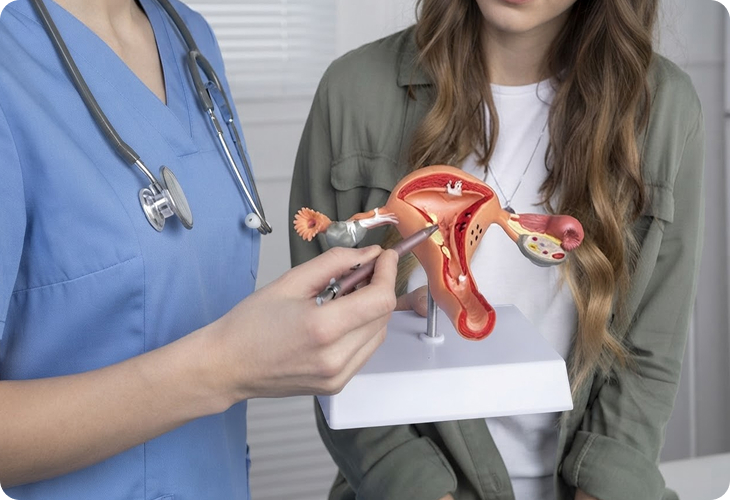
Fibroids can affect your periods, cause pelvic discomfort and lead to changes in your usual menstrual pattern. Some women have no noticeable symptoms, while others experience problems that affect their daily lives.
The symptoms can vary depending on the size, number and location of the fibroid. Heavy periods, painful periods, pelvic pain and bleeding between periods can all occur.
However, recognising fibroid symptoms can help you determine when to seek further medical assessment. This guide explains the common symptoms, how doctors diagnose fibroids and the fibroid treatment options available.
What Are Uterine Fibroids?
Uterine fibroids are usually non-cancerous growths that develop from the muscle and connective tissue of the uterus. You may have a single fibroid or several, and they can vary considerably in size.
Some remain small and cause no symptoms. Others become larger and affect the uterus or nearby organs.
Hormonal activity can influence fibroid growth. Estrogen and progesterone play a role in the reproductive system and can affect fibroid tissue.
Where Can Fibroids Develop?
Fibroids can develop in different parts of the uterus. Doctors often describe them according to their location.
Intramural Fibroids
Intramural fibroids develop within the muscular wall of the uterus. They can remain small or become larger over time. Larger growths may contribute to heavy bleeding, pelvic pressure or discomfort.
Submucosal Fibroids
Submucosal fibroids develop close to the inner lining of the uterus. They can extend into the uterine cavity. Their position can affect menstrual bleeding. Some women may experience heavy periods or bleeding between periods.
Subserosal Fibroids
Subserosal fibroids grow on the outer surface of the uterus. As they increase in size, they can press against nearby organs, causing abdominal pressure or pelvic discomfort.
Pedunculated fibroids attach to the uterus through a narrow stalk. They can develop on either the inner or outer surface of the uterus. Symptoms depend on their size and location.
What Causes Fibroids?
Doctors have not identified one specific cause of fibroids. Several factors may influence their development. Hormones, genetics and family history may all have a role.
Estrogen and progesterone can influence fibroid tissue. This may affect how fibroids behave during the reproductive years. Fibroids can also change over time. Their size and symptoms may vary at different stages of life.
What Are the Main Fibroids Symptoms?
Many women do not experience symptoms. When symptoms develop, they can affect your periods, comfort and daily activities.
Common fibroids symptoms include:
- Heavy menstrual bleeding
- Longer periods
- Painful periods
- Pelvic pain
- Pressure in the lower abdomen
- Bleeding between periods
- Pain during sex
- Lower back discomfort
- Frequent urination
- Bowel pressure or constipation
- A feeling of fullness in the abdomen
The symptoms women experience from fibroids do not always depend on the size of the growth. A smaller fibroid can cause significant symptoms if it develops in a sensitive area.
Can Fibroids Cause Heavy Periods?
Fibroids can affect the amount and duration of menstrual bleeding. You may notice that your heavy period lasts longer or that you need to change sanitary products more frequently.
Heavy bleeding can interfere with work, exercise, sleep and everyday activities. Continued bleeding can also lead to blood loss. Over time, this may contribute to low iron levels or anaemia. If your periods have become noticeably heavier, speak with a healthcare professional.
Can Fibroids Cause Pelvic Pain?
Fibroids can cause pelvic pain, pressure or discomfort. A larger fibroid may press against surrounding tissues. This can create a feeling of heaviness or fullness in the lower abdomen.
Some women with fibroids experience painful periods. Others notice discomfort throughout their menstrual cycle. Fibroids can also cause pain during sex.
However, pelvic pain can have many causes. A proper assessment can help identify the underlying reason.
Can Fibroids Cause Bleeding Between Periods?
Some fibroids can contribute to bleeding between periods. This can occur when a fibroid affects the inner part of the uterus.
However, bleeding outside your normal menstrual cycle can have several causes. Your doctor may recommend further assessment to identify what is causing it. Keep a record of when the bleeding occurs. This can help your doctor understand your symptoms.
Can Fibroids Grow?
Fibroids can grow over time, although some remain stable for long periods. Others may gradually increase in size.
Larger fibroids may cause more pressure on nearby organs. They can also produce symptoms that were not present when the fibroid was smaller.
Your doctor may compare previous scan results with newer imaging to assess changes.
How Are Fibroids Diagnosed?
A fibroid diagnosis usually begins with a discussion about your symptoms. Your doctor may ask about:
- Your menstrual cycle
- Heavy or painful periods
- Pelvic pain
- Bleeding between periods
- Previous gynaecological conditions
- Your medical history
- Previous scans
- Current medicines
- Fertility concerns
Your doctor may also perform a routine pelvic exam. This can help identify changes in the size or shape of the uterus. Your doctor may recommend an ultrasound scan if they need a clearer view.
What Tests Can Detect Fibroids?
An ultrasound scan can help examine the uterus and identify fibroids.
It can provide information about:
- The number of fibroids
- Their size
- Their position
- Their relationship with the uterus
Your doctor may recommend other investigations when an ultrasound does not provide enough information.
Blood tests may also help assess the effects of heavy menstrual bleeding. For example, your doctor may check for signs of anaemia.
Why Does the Location of the Fibroid Matter?
The location of a fibroid can influence the symptoms it causes. An intramural fibroid grows within the muscular wall of the uterus. It may cause heavy bleeding or pelvic pressure.
A submucosal fibroid develops beneath the uterine lining. It may cause heavier menstrual bleeding. A subserosal fibroid grows towards the outer surface of the uterus and may cause pressure on nearby organs.
A pedunculated fibroid attaches to the uterus through a narrow stalk. Its effects can vary depending on its location and size. Understanding the location of a fibroid can help your specialist assess whether it may be contributing to your symptoms.
Do All Fibroids Need Treatment?
No. Some women have fibroids without significant symptoms. In these cases, monitoring may be appropriate. Treatment may become necessary when fibroids cause problems such as:
- Heavy periods
- Persistent pelvic pain
- Painful periods
- Bleeding between periods
- Pressure symptoms
- Urinary or bowel problems
- Symptoms that affect everyday life
Your symptoms and individual circumstances will guide the decision.
What Is Fibroid Treatment?
Fibroid treatment can focus on controlling symptoms, reducing fibroid size, or removing them. Depending on your circumstances, your specialist may discuss:
- Monitoring
- Medication
- Hormonal treatment
- Minimally invasive procedures
- Myomectomy
- Other surgical options
The most suitable option can depend on the size, number and location of the fibroids.
Your future pregnancy plans may also influence the decision.
Can Medication Help Fibroid Symptoms?
Medication can help manage some fibroid symptoms. Your doctor may recommend medication to help control heavy bleeding or painful periods. Some treatments focus on managing symptoms rather than removing the fibroid.
Your medical history and individual circumstances will help your specialist decide whether medication is appropriate. If symptoms continue, your specialist may discuss other treatment options.
What Side Effects Can Fibroids Cause?
Fibroids do not cause "side effects" in the same way medicines do. However, they can have several effects on your health and daily life. These can include:
- Heavy menstrual bleeding
- Blood loss
- Pelvic pain
- Painful periods
- Abdominal pressure
- Frequent urination
- Bowel pressure
- Pain during sex
The effects can vary according to the size and location of the fibroid.
How Do Estrogen and Progesterone Affect Fibroids?
Estrogen and progesterone can influence fibroid tissue. These hormones change naturally during the menstrual cycle and throughout different stages of life. Hormonal changes can affect fibroid growth and the symptoms you experience. Your specialist may consider these factors when discussing your symptoms and treatment options.
When Might You Need Fibroid Treatment?
Your specialist may discuss treatment when symptoms become persistent or difficult to manage. This may include:
- Heavy menstrual bleeding
- Persistent pelvic pain
- Painful periods
- Bleeding between periods
- Pressure symptoms
- Bladder or bowel problems
- Fertility concerns
Treatment does not depend on symptoms alone. Your specialist will also consider the characteristics of the fibroids.
What Procedures Can Treat Fibroids?
Several procedures can form part of a fibroid treatment plan.
Myomectomy
A myomectomy removes fibroids while keeping the uterus in place. A specialist may consider this option when you want to retain your uterus. The approach can depend on the number, size and location of the fibroids.
Uterine Artery Embolisation
Uterine artery embolisation reduces the blood supply to fibroids. Reduced blood flow can cause the fibroid tissue to shrink. Your specialist can explain whether this treatment is appropriate for you.
Hysterectomy
A hysterectomy removes the uterus. A specialist may recommend it when fibroids cause significant symptoms and other treatments have not helped. Because the procedure removes the uterus, it ends the ability to carry a pregnancy. Your future reproductive plans should therefore form part of the discussion.
Can Fibroids Affect Fertility?
Fibroids can affect fertility in some women. Their impact may depend on their size and location, particularly if they affect the inner cavity of the uterus.
If you are planning a pregnancy, discuss this with your specialist. Your fertility goals can help guide your treatment plan.
How Can Fibroids Affect Daily Life?
Fibroid symptoms can affect more than your physical health. Heavy bleeding may make it difficult to work, exercise or sleep comfortably. Pelvic pain can affect concentration and movement. Pressure from larger fibroids may also affect bladder or bowel function.
Some women change their daily routines because they worry about heavy bleeding or pain. If symptoms are affecting your quality of life, discuss them with a healthcare professional.
When Should You See a Fibroid Specialist?
Consider an assessment if you experience persistent or changing symptoms.
A fibroid specialist can help investigate concerns such as:
- Heavy periods
- Painful periods
- Persistent pelvic pain
- Bleeding between periods
- Increasing abdominal pressure
- Urinary symptoms
- Bowel symptoms
- Known fibroids that have changed
- Fertility concerns
You do not need to wait until symptoms become severe before seeking advice.
How Are Treatment Plans Decided?
Your specialist will consider your individual situation before recommending treatment. Your treatment plans may take into account:
- Your symptoms
- Fibroid size
- Number of fibroids
- Location of the fibroid
- Your medical history
- Previous scan results
- Your age
- Your fertility plans
- Your personal preferences
Two women can have fibroids but need completely different approaches.
Your specialist can explain the available options and help you understand what each one involves.
Fibroids Including Different Types and Symptoms
Fibroids, including intramural, submucosal, subserosal and pedunculated types can produce different symptoms.
The type alone does not determine how severe your symptoms will be.
Your specialist will look at the complete picture. This includes your symptoms, scan findings, medical history and treatment goals.
Fibroids Specialist in Milton Keynes
If you are looking for fibroids care in Milton Keynes, at Bloom Health, our specialist can help you understand your symptoms. You can discuss heavy periods, pelvic pain, bleeding between periods or a previous fibroid diagnosis with us. Our specialist can review your symptoms and previous investigations before discussing the next steps.

Quick note :
This article provides general information about fibroids, their symptoms, diagnosis and treatment. It does not provide a personal diagnosis or treatment recommendation. Speak with a qualified healthcare professional for advice based on your symptoms and individual circumstances.
About this Article