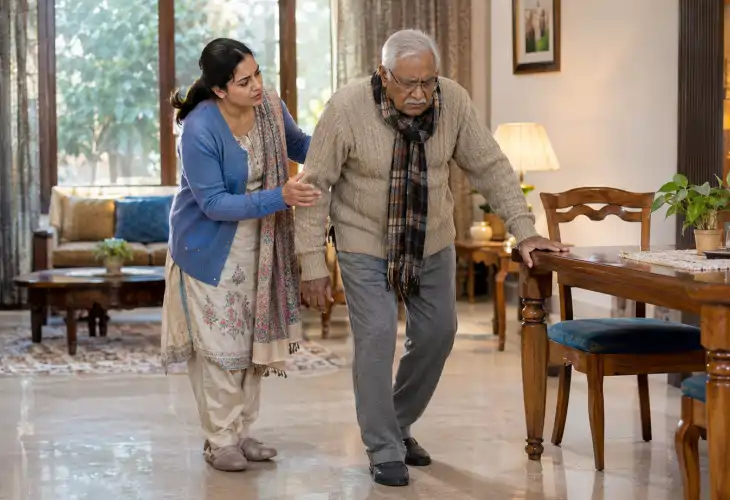
Icy pavements, dark evenings and heavy clothing make winter a risky season for older adults. A fall can mean a broken bone and a long recovery, yet effective falls in older adults prevention is often simple: a few changes at home and some early checks.
Why Falls Are a Serious Concern in Later Life
Falls are a leading cause of injury in people over 65. With age, balance, muscle strength, eyesight and reflexes change, and bones may become more fragile. A minor slip can therefore cause a hip fracture, wrist fracture or head injury.
What Makes Winter Falls More Likely
- Wet leaves, frost and black ice outdoors
- Shorter daylight hours and poor visibility
- Bulky coats and unsuitable footwear
- Reduced activity, leading to weaker muscles
- Low vitamin D levels affecting bone and muscle health
Falls in Older Adults: Prevention Steps That Work
Effective falls in older adults prevention combines the environment with personal health.
- Keep floors clear of cables, loose rugs and clutter
- Fit bright lighting, especially on stairs and in hallways
- Wear shoes with firm grip and a thin, non-slip sole
- Use handrails, grab bars and a walking aid if advised
- Stay active, with strength and balance exercises
- Have eyes and medicines reviewed regularly
Winter Falls Prevention in the UK
Good winter falls prevention UK habits include grit or salt on paths, taking shorter steps on slippery surfaces, and carrying a phone in a pocket. Consider asking a neighbour or relative to help with errands in icy spells.
Injury After a Fall: When to Seek Help
Understanding injury after a fall when to seek help can prevent serious complications.
- Severe pain, swelling or inability to bear weight
- A visibly deformed limb
- A blow to the head, especially for those on blood thinners
- Dizziness, confusion, vomiting or drowsiness after a fall
- Repeated falls or near misses (arrange a review)
Medicines, Eyesight and Footwear Reviews
Several common medicines, including some blood pressure tablets, sleeping tablets and antidepressants, can cause dizziness. A pharmacist or doctor can review the full list and adjust where needed. Annual eye tests also matter, as poor vision or outdated glasses raise fall risk.
Check that slippers and shoes fit well and have firm soles. Loose, worn or backless slippers are a common but overlooked hazard.
Staying Strong Through the Cold Months
Muscle strength and balance fade quickly when people stop moving. Gentle exercises such as tai chi, chair-based strength work and short daily walks on safe surfaces help. Local falls prevention classes are available in many areas.
Good nutrition, enough protein, calcium and vitamin D also protect bones. Older adults are advised to consider a vitamin D supplement through autumn and winter.
Scans and Specialist Assessment
Suspected fractures need imaging. A private X-ray Milton Keynes service such as Bloom Health, where an on-site radiographer is available from 12pm to 8pm daily, can provide quick diagnosis for bone injuries. Joint or fracture concerns may need an orthopaedic consultant Milton Keynes can arrange, and Bloom lists Prof Bill Ribbans as a Consultant in Trauma and Orthopaedic Surgery.
Conclusion
Winter falls are common, but with safer homes and sensible footwear many can be avoided. After any injury, a private X-ray Milton Keynes service can confirm quickly whether a bone is broken.
Bloom Health Hospital, 163-175 Grafton Gate, Milton Keynes, offers walk-in urgent care from 8am to 10pm every day, with no appointment needed.

Quick note :
This article provides general health information and does not replace a clinical assessment. Call 999 for severe or life-threatening symptoms.
Quick note: This article provides general health information and does not replace a clinical assessment. Call 999 for severe or life-threatening symptoms.
About this Article