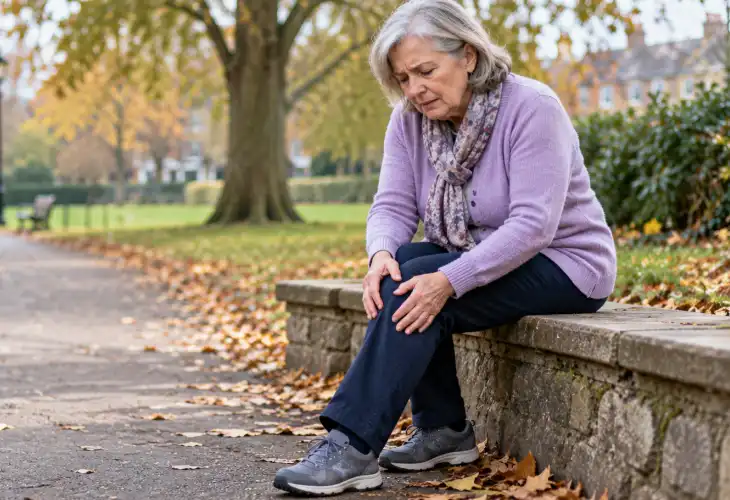
The knee is the largest joint in the body and carries your weight with every step, so knee pain when walking is one of the most common musculoskeletal complaints. It can come from worn cartilage, a torn meniscus, ligament or tendon problems, arthritis, or pain referred from the hip or back. This blog explains why the joint becomes painful, which signs need prompt attention, how clinicians assess it and when surgery may be considered. It also covers the causes of knee pain that are easy to overlook, for patients, carers and local residents in Milton Keynes. It does not replace a clinical assessment.
What Is Knee Pain?
The knee is a hinge joint where the thigh bone, shin bone and kneecap meet. Cartilage and a cushioning pad called the meniscus protect the surfaces, ligaments keep the joint stable and tendons connect muscle to bone.
Pain can come from any of these structures. It may feel sharp, dull, grinding or like pressure, and it may be mainly mechanical, linked to movement, or inflammatory, linked to swelling and morning stiffness. Pain when walking often appears first on stairs, slopes or uneven ground.
Causes and Risk Factors
Osteoarthritis, where the cartilage thins with wear, is a leading cause in adults. Other causes include a meniscus tear, ligament injury, pain around the kneecap, tendon problems, bursitis, gout and inflammatory arthritis such as rheumatoid arthritis. Pain can also be referred from the hip or lower back.
A risk factor increases the chance of a problem without causing it directly. Examples are older age, being overweight, a previous knee injury, jobs involving kneeling or squatting, repeated high-impact sport, weak thigh muscles and a family history of arthritis. Often more than one factor is involved.
Symptoms and Warning Signs
Get same-day medical advice if you have:
- A hot, red, swollen knee with fever or feeling unwell.
- Inability to put weight on the leg after an injury.
- Visible deformity, or a knee that is stuck and will not straighten.
- Swelling, pain or warmth in the calf, which can signal a blood clot.
Other symptoms that need assessment
- Pain on stairs, slopes or after sitting.
- Swelling or stiffness, particularly in the morning.
- Clicking, grinding or catching.
- A feeling that the knee gives way.
- Pain that wakes you at night.
Diagnosis and Tests
Not everyone needs every test. A clinician decides based on your history and examination, and the findings guide which scans, if any, are needed:
- Questions about when the pain started, any injury, and what makes it better or worse.
- An examination of movement, stability, swelling and gait.
- An X-ray, often taken standing, to show joint wear and alignment.
- An ultrasound scan to look at tendons, fluid and soft tissue.
- An MRI scan for cartilage, ligament or meniscus problems.
- Blood tests if inflammatory arthritis or gout is suspected.
- Drawing fluid from the joint when infection or crystals are possible.
Treatment and Management
Treatment depends on the cause, your activity and your preferences. Many people begin with non-surgical care:
- Adjusting activities that aggravate the knee, without stopping movement altogether.
- Physiotherapy and strengthening exercises.
- Weight management where relevant.
- Pain relief such as paracetamol or anti-inflammatory gels or tablets, if suitable for you.
- Supportive footwear, a brace or a walking aid.
- Specific medicines for an underlying condition such as gout or inflammatory arthritis.
- Injections, which may give short-term relief for some people.
- Surgery: considered if pain, locking or instability continues despite non-surgical care, or when joint damage affects daily life. Options include keyhole surgery for selected meniscus tears, ligament reconstruction and partial or total knee replacement.
- Surgical risks include infection, blood clots, stiffness and anaesthetic complications. Recovery varies and usually involves structured rehabilitation.
Self-Care and Symptom Management
Stay active within comfortable limits, and favour low-impact options such as swimming or cycling. Ice can ease swelling after activity. Wear cushioned shoes, and take stairs one step at a time if they hurt. Avoid long periods of kneeling or deep squatting while symptoms settle. Self-care suits mild, short-lived pain. Seek assessment if it keeps returning or limits what you can do.
When Should You See a Doctor?
Arrange a routine appointment if pain has lasted more than a few weeks, is worsening or limits walking, work or sleep. Seek urgent advice for the warning signs above. Knowing knee pain when to see a doctor guidance in advance makes it easier to act promptly, so also be reviewed if swelling keeps returning or the knee feels unstable. Tell the clinician about any medicines, previous injuries and activities that worsen the pain.
How to Choose the Right Specialist or Hospital in Milton Keynes
- Check registration with the Care Quality Commission (CQC).
- If you are looking for an orthopaedic consultant Milton Keynes offers, or a knee specialist Milton Keynes providers list, check their entry on the General Medical Council's specialist register under trauma and orthopaedic surgery.
- Ask about their experience with your type of knee condition.
- Ask whether the consultant explains surgical and non-surgical options without pressure.
- Ask what imaging and physiotherapy are available, and how fees and follow-up are handled.
Why Choose Bloom Health?
Bloom Health is a CQC-registered private hospital in Milton Keynes. Its orthopaedics service lists joint pain, sports injuries, arthritis and fractures, and specialist consultations do not need a GP referral. Its walk-in urgent care centre treats sprains, strains and soft tissue injuries from 8am to 10pm daily for a £95 visit fee, with tests billed separately.
X-ray is available with a radiographer on site from 12pm to 8pm daily, and ultrasound runs on Tuesdays and Wednesdays. MRI is arranged through trusted local partners.
Conclusion
Understanding the reasons for knee pain when walking helps you separate everyday aches from problems that need assessment. Many people improve with non-surgical care, while others benefit from imaging and specialist advice. If the pain keeps returning or is changing how you move, a clinician can examine the joint and explain the options. A note of when the pain occurs, and what eases it, helps the consultation.
About this Article